

Documentary Production: Beginner Step-by-Step Guide
A documentary is one of the most powerful forms of video ever made. It can change how people think, shine a light on something the world has never seen, and give a voice to people and places that are often overlooked. If you have a story worth telling, a documentary might be exactly the right way to tell it.
Table of Contents
This guide walks you through every step of documentary production, from finding your first idea to delivering a finished film, in clear and simple language that anyone can follow.
What Is a Documentary Film?
A documentary film is a non-fiction video that captures real events, real people, and real stories. Unlike a scripted movie or a commercial, a documentary does not use actors playing made-up characters. The people you see on screen are real, the events are real, and the purpose is to inform, educate, or move the audience by showing them something true.
Documentaries come in many different forms. Some follow a person through a journey or challenge. Others explore a social issue, a historical event, a community, or an organization. Some are short, running ten to twenty minutes. Others are feature-length films that run for ninety minutes or more. What they all share is a commitment to capturing reality with honesty and care.
Hamza’s Production produces documentaries across Pakistan and Dubai for NGOs, businesses, cultural organizations, educational institutions, and individuals. Their work spans social impact stories, corporate histories, community portraits, and personal journeys, all produced with cinematic quality and journalistic integrity.
Who Makes Documentaries and Why?
Documentaries are made by a wider range of people and organizations than most people realize.
Non-profit organizations and NGOs use documentaries to show the impact of their work, raise awareness about the communities they serve, and attract donors and supporters. A documentary showing real families benefiting from a clean water project, for example, is far more persuasive than any written report.
Businesses use corporate documentaries to tell the story of how their company started, showcase the people behind their brand, or document a significant project. This kind of storytelling builds deeper trust with clients and partners than a standard company profile video alone. For organizations that also want a shorter brand introduction, a corporate profile video can work alongside a full documentary to serve different audiences and contexts.
Government bodies, educational institutions, and cultural groups commission documentaries to preserve history, document important events, and create content that serves the public interest.
Individual filmmakers make documentaries because they have seen or experienced something that the world deserves to know about, and they want to give that story the space and attention it needs.
Step 1: Find Your Story and Define Your Purpose
Every documentary starts with a story. But not just any story. A good documentary story has a clear subject, a reason to care, and something at stake. Before you do anything else, ask yourself three questions: what is this documentary about, who is it for, and why does it matter?
The more specific your answer to these questions, the stronger your documentary will be. A documentary about “farming” is too broad. A documentary about one family in northern Pakistan who has been growing saffron for four generations, and what happens when their livelihood is threatened by climate change, is a real story with real people and real consequences.
According to the Sundance Institute, which supports independent documentary filmmakers worldwide, the most compelling documentaries are built around human stories, not just topics or issues. The issue becomes powerful when it is seen through the eyes of a real person facing a real challenge.
Step 2: Do Your Research
Once you have your story, you need to understand it deeply before you can tell it well. Research means reading everything available on your subject, finding out who the key people are, understanding the history and context, and identifying what questions your documentary needs to answer.
Research also means finding your subjects. Who will appear in your documentary? Where do they live or work? Are they willing to participate? Can you get access to the places, events, or materials you need to film?
At this stage, you may discover that the story you thought you were making is actually more complex, more nuanced, or more interesting than you first realized. Good research often changes the shape of a documentary before a single frame is shot.
Step 3: Develop Your Concept and Structure
A documentary needs a structure, just like any story. Without structure, a documentary is just a collection of footage and interviews with no sense of direction or meaning.
Most documentaries follow one of a few basic shapes. Some build toward a single moment of resolution or revelation. Others trace a journey from beginning to end, following a person or event over time. Some explore a question and present different perspectives before arriving at a conclusion. The structure you choose depends on the story you are telling and the effect you want to have on the audience.
At this stage, you create a treatment, which is a written document that describes what the documentary is about, who the key characters are, what the structure will be, what the major scenes or sequences will look like, and what the tone and style of the film will be. A treatment is not a full script. It is a plan that gives everyone involved a shared understanding of where the project is going.
Step 4: Write Your Script or Treatment
Some documentaries are fully scripted before filming begins. Others are more observational, meaning the filmmaker follows events as they unfold without knowing exactly what will happen. Most fall somewhere between these two approaches.
Even if your documentary will be largely unscripted, you should still plan your narrator’s voice, any written text that will appear on screen, and the key questions you will ask in your interviews. This kind of loose scripting gives your production a backbone while still leaving room for the unexpected moments that often become the most powerful parts of a documentary.
If your documentary will include a narration voice-over, this is the stage where you draft the narration text. A professional voice-over recorded with the right tone, pace, and emotion can completely transform how a documentary feels and how it guides the audience through the story.
Step 5: Plan Your Production
Pre-production planning for a documentary is different from planning a scripted video. You cannot fully control what will happen, but you can prepare thoroughly for the range of things that might happen.
Your production plan should cover your filming schedule, the locations where you will shoot, the equipment you need, the crew required, any travel arrangements, and permissions or access agreements you need to secure before filming begins. If you plan to film in a specific location, whether a factory, a village, a government building, or a private home, you need permission before your crew arrives.
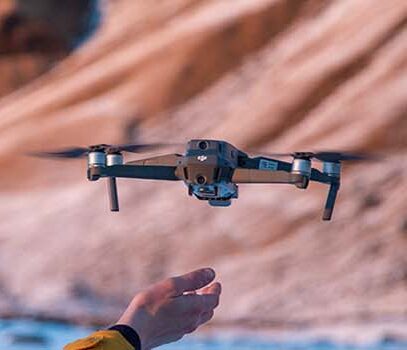
If your story involves wide outdoor landscapes, large facilities, or events that benefit from a bird’s-eye view, drone videography can add remarkable visual depth to your documentary. Aerial footage of a community, a natural environment, or a large gathering creates scale and context that ground-level cameras simply cannot match.
Step 6: Film Your Documentary
On-location filming is where the documentary really comes to life. Your job as a filmmaker during this phase is to be observant, patient, and ready. Real life does not perform on cue. The best documentary footage often comes from moments the filmmaker did not expect but was present enough to capture.
Documentary filming requires cinematic equipment and skilled camera operators who understand how to work quietly and unobtrusively. Heavy-handed or intrusive filming often causes subjects to behave differently on camera, reducing the authenticity that makes documentary footage powerful. A skilled documentary crew knows how to blend into the environment while still capturing everything with professional clarity and precision.
Step 7: Conduct Your Interviews
Interviews are the foundation of most documentary films. They give the audience direct access to the thoughts, feelings, and experiences of the people at the center of the story. A well-conducted documentary interview feels like a conversation, not an interrogation.
Good interview technique means preparing thoughtful, open questions that invite the subject to speak freely and in detail. It means creating a relaxed environment where the subject feels comfortable being honest. And it means knowing when to stay quiet and let the subject think, because often the most meaningful answers come after a pause.
Interview footage should be recorded with professional audio equipment. Poor sound quality is one of the most common problems in amateur documentary work, and it makes even the most powerful content feel unpolished and hard to watch.
According to Harvard Business Review, authentic storytelling, where real people speak in their own words, is the most effective way to build emotional connection and trust with an audience. This is exactly what great documentary interviews achieve.
Step 8: Edit Your Footage
Editing is where a documentary is truly made. A skilled editor takes hours or even days of raw footage and shapes it into a coherent, emotionally engaging story that moves at the right pace and stays with the audience long after the screen goes dark.
The editing process begins with reviewing all the footage and identifying the strongest moments, the clearest interview answers, and the most powerful visual sequences. These are organized into a rough cut, which is a first version of the documentary that establishes the basic shape of the story. From there, the editor refines and adjusts, cutting things that slow the story down and finding new connections between different pieces of footage.
Editing a documentary requires both technical skill and storytelling instinct. It is not just about removing unwanted footage. It is about finding the story that is already there in the material and making it visible.
Step 9: Add Voice-Overs, Music, and Sound Design
Once the picture edit is locked, the sound design stage begins. This involves adding the narration voice-over if one is included, choosing and integrating music that supports the emotional tone of each section, and designing the ambient sound that makes the world of the documentary feel real and present.
Music in a documentary is a powerful tool. It can create anticipation, sadness, joy, urgency, or calm. But it needs to be used thoughtfully. Music that is too loud or too dramatic can feel manipulative, undermining the authenticity that makes documentary storytelling work.
Think with Google research on video content shows that sound quality and the emotional resonance of the audio track play a significant role in how long viewers stay engaged with video content. Getting the sound right is not a finishing touch. It is central to the overall quality of the film.
Step 10: Color Grade and Finalize
Color grading is the process of adjusting the visual look of the footage so that it is consistent from scene to scene and communicates the right mood for the story. A skilled colorist can make outdoor footage look warmer or cooler, give indoor scenes a particular atmosphere, and create a visual signature that makes the documentary feel like a coherent artistic work rather than a collection of clips shot on different days.
After color grading, the documentary goes through a final quality check before being exported in the formats needed for its intended platform, whether that is broadcast television, online streaming, cinema projection, or internal organizational use. For documentaries intended for broadcast, the export specifications need to meet the standards of the relevant network or platform.
For organizations looking to reach a wider audience through broadcast, broadcasting services ensure that the final film is delivered in the correct technical format for television and digital distribution.
How Long Does It Take to Produce a Documentary?
The timeline for a documentary varies enormously depending on the subject, the scope, and the length of the film. A short documentary of ten to twenty minutes, covering a single story or event, can typically be produced in four to eight weeks from start to finish. A longer, more complex documentary following multiple subjects or requiring travel to various locations might take several months.
The longest phase in most documentary productions is the edit, because it requires careful and thoughtful work to shape raw material into a finished story. Rushing the edit almost always results in a weaker final film.
Common Mistakes First-Time Documentary Makers Make
Beginners in documentary production tend to make the same handful of mistakes. The most common is trying to cover too much. A documentary that tries to tell ten stories ends up telling none of them well. The strongest documentaries are focused and specific, telling one story deeply rather than many stories shallowly.
Another common mistake is starting to film before the research is complete. Arriving at a location without understanding the story fully means missing the most important moments and asking the wrong questions in interviews.
Neglecting sound quality is perhaps the most damaging technical mistake. Viewers will forgive imperfect visuals in a documentary if the story is strong, but poor audio immediately signals amateur production and makes the content difficult to sit through.
Finally, many first-time documentary makers underestimate how much footage they will need. Documentary editing works best when there is plenty of material to choose from. Shooting generously and with variety gives the editor the flexibility to find the best version of the story.
Working with a Professional Documentary Production Team
For organizations, businesses, and individuals who want their story told with cinematic quality and professional care, working with an experienced documentary production company makes a significant difference.
Hamza’s Production has over 15 years of experience producing documentary films across Pakistan and Dubai. Their team handles the full process from concept development and research through on-location filming, interviews, editing, voice-over, color grading, and final delivery. They have produced documentaries for NGOs, corporations, government bodies, cultural institutions, and individual clients, across subjects as varied as social impact, community life, corporate history, and natural landscapes.
Whether your documentary will be shared with a small audience or broadcast to the world, the care put into every stage of production is what determines whether it truly connects. A documentary that moves people, that makes them think and feel and remember, is one of the most lasting things any organization or individual can create.
To begin your documentary project, visit Hamza’s Production and book a free consultation today





Thrivecrafter
Keep up the great work.
textslangs
Great article, very helpful!