

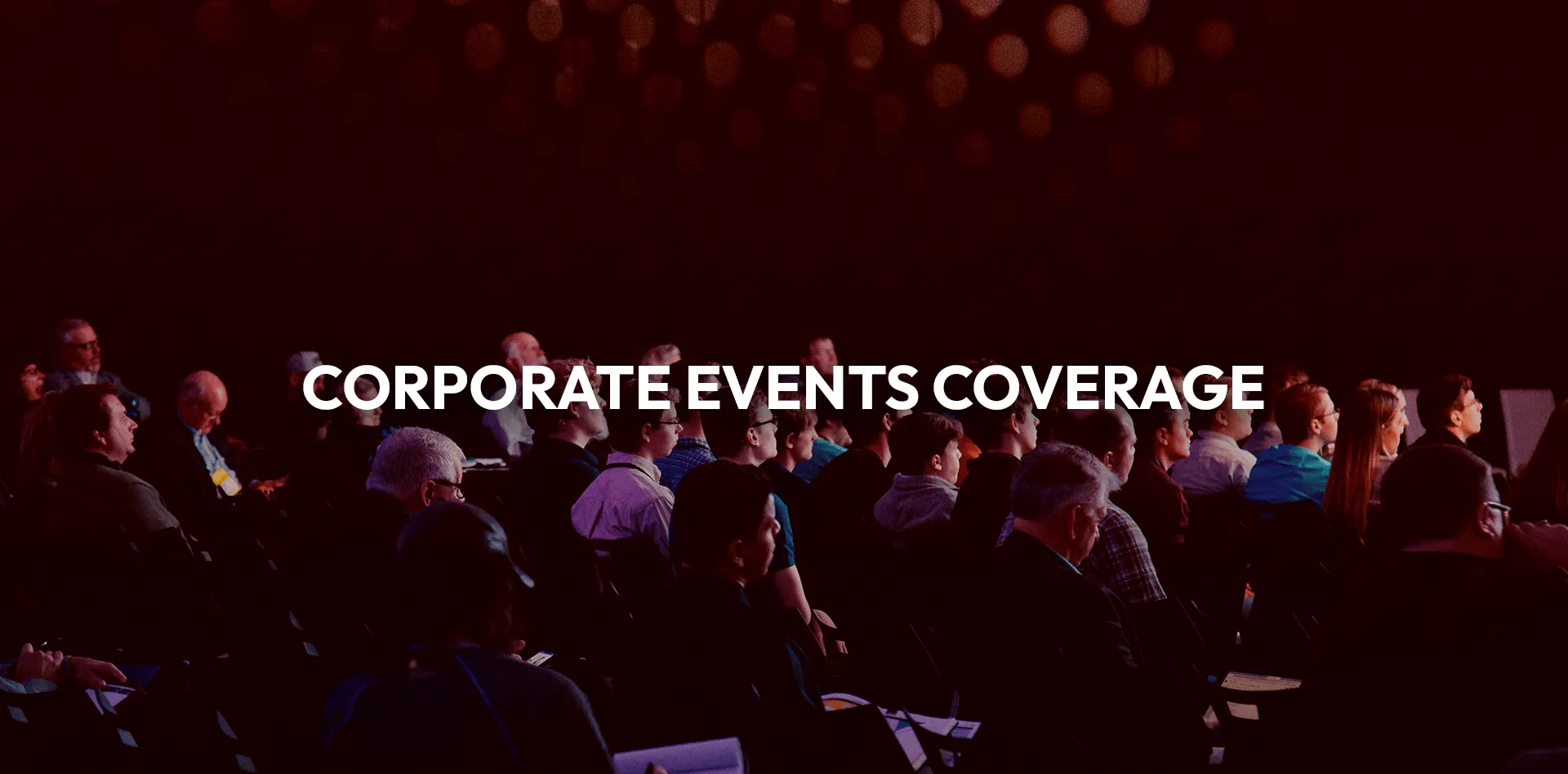
Corporate Photography Checklist for Business Events
A business event takes weeks to plan. Speakers are booked, venues are arranged, branding materials are printed, and teams are briefed. Yet some companies still treat photography as an afterthought, thinking one person with a camera is enough to handle it on the day.
Table of Contents
The result is always the same: blurry crowd shots, missed keynote moments, no usable headshots, and photos that could not be used on a website or press release.
Corporate photography is not just about pointing a camera at the right place at the right time. It is a planned process that starts days before the event and continues well after the venue is cleared. This checklist covers everything your photographer, your marketing team, and your event coordinator need to go through together so that your business event is documented the way it deserves to be.
Whether you are planning a product launch, a conference, a corporate gala, an internal awards ceremony, or a brand activation, this guide gives you a clear, step-by-step structure to follow. For businesses that want a professional team to manage this process end to end, Hamza’s Production offers full-service corporate profile video and photography coverage across Pakistan and Dubai.
Before the Event: Pre-Shoot Planning
The quality of your event photos is decided mostly before anyone picks up a camera. Planning is where professional corporate photographers separate themselves from casual ones.
Define the Purpose and Final Use of Photos
Before anything else, answer one question: what will these photos be used for? The answer changes everything about how the shoot is planned.
Photos for a press release need to be sharp, clean, and suitable for print at high resolution. Photos for LinkedIn or Instagram need to be composed for vertical or square crops. Photos for an internal newsletter do not need the same production standard as a company profile or an annual report.
Knowing the final use also helps determine how many photographers you need, whether you need a second angle at key moments, and which specific moments absolutely cannot be missed. According to Adobe’s content creation research, teams that define a clear visual brief before an event consistently get more usable photos than teams that rely on a generic “shoot everything” approach.
Scout the Venue in Advance
Every venue has lighting problems, awkward angles, and dead zones that are impossible to fix on the day. A venue scout even a one-hour walk-through the day before solves these problems while there is still time.
During the scout, your photographer should check where the main stage or podium is positioned relative to the light source, which directions create useful backgrounds and which create cluttered ones, where power outlets are for charging equipment, and where the best vantage points are for different types of shots.
Hamza’s Production includes venue scouting as a standard part of its corporate events coverage service to ensure no surprises happen on the day.
Create a Shot List
A shot list is the most important document a corporate event photographer can have. It is a written list of every specific photo that must be taken during the event, arranged in chronological order.
A typical corporate event shot list covers arrival and registration, the main stage setup before guests arrive, speaker portraits before they take the stage, keynote and panel moments, audience reactions, sponsor and partner branding placements, networking sessions, any product display or demonstration, group photos of leadership teams, and closing remarks or award presentations.
The shot list should be created with input from the marketing or communications team, not just the photographer. The people who will use the photos know what they need. The photographer’s job is to make sure those specific shots are captured.
Confirm Equipment and Backup Gear
Professional corporate photography requires more than one lens and one camera body. A responsible photographer always brings backup equipment because equipment failures are a real possibility at live events.
A standard professional kit for a business event includes at least two camera bodies, a range of lenses covering wide shots and portraits, external flash units, battery packs and chargers, extra memory cards, a laptop for quick backup during longer events, and a tripod or monopod for low-light stage photography.
Confirm all of this with your photographer or production team before the event day. Do not assume.
Brief the Team and Key Stakeholders
Your photographer is not a mind reader. Before the event, they need to meet or at least have a call with the event coordinator, the communications lead, and any VIP who needs to be photographed.
Share the run of show so they know exactly what is happening when. Introduce them to the event host or MC. Point out any speakers, executives, or guests of honor who must appear in photos. If there are any moments that are off-limits for photography private briefings, sensitive discussions make that clear in advance.
During the Event: On-the-Day Execution
Even with the best planning, the day itself requires a structured approach. Corporate events move fast and missed moments cannot be recreated.
Arrive Early and Set Up Properly
Your photographer should arrive at least 60 to 90 minutes before the first guest. This gives time to test ambient lighting, check flash settings, identify the best positions for different shots, and do a final review of the shot list.
For large conferences or multi-stage events, a full technical run-through the night before is even better. This is especially important when live streaming or broadcast coverage is also part of the event plan, since camera positions need to be coordinated so photographers and videographers do not block each other.
Capture the Right Mix of Shots
Strong corporate event coverage uses three types of shots: wide establishing shots, mid-range contextual shots, and close-up detail shots.
Wide shots show the scale of the event: a full room of attendees, a branded stage, a decorated entrance. Mid-range shots capture real interactions, such as two people in conversation, a speaker engaging with the audience, or a team gathered at a product display. Close-up shots focus on moments of expression, branded materials, products, awards, or handshakes.
A complete set of event photos uses all three. Any coverage that relies too heavily on one type leaves gaps that are hard to explain later when the communications team is putting together a report or a campaign.
Photograph People Naturally
The biggest difference between average corporate photos and professional ones is how people are photographed. Stiff, posed group photos taken against a plain wall rarely represent the energy or culture of a business well.
The best corporate event photographers work mostly in the background, moving through the event quietly and capturing people when they are engaged in the event rather than when they are aware of the camera. According to research published by the Content Marketing Institute, authentic imagery that shows real people in real situations consistently outperforms staged photography in audience engagement and brand trust.
When posed shots are needed for group photos or executive portraits, keep the setup fast and relaxed. Give clear, simple direction, limit each group shot to under five minutes, and take enough frames at each setup that you have options for facial expressions.
Manage Lighting Challenges
Conference halls, hotel ballrooms, and office meeting rooms all share the same photography problem: mixed and often unflattering artificial lighting. Stage lighting changes color temperature constantly. Windows create hard backlighting that silhouettes faces. Ceiling downlights cast unflattering shadows under eyes.
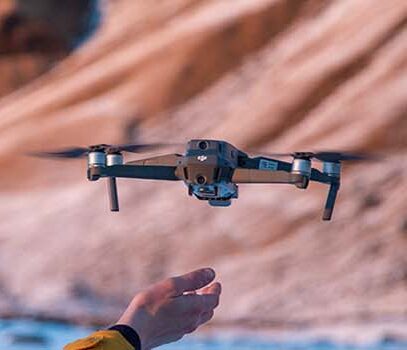
Professional corporate photographers know how to work with these conditions using off-camera flash, diffusers, and manual exposure settings. If drone photography is part of your event coverage for outdoor activations, premises tours, or large-scale exhibitions coordinate this separately with your team at Hamza’s Production drone photography service to ensure airspace rules and safety protocols are followed.
Keep Track of Must-Have Moments
Even with a shot list, events move fast and distractions happen. A practical solution is to assign one person from the organizing team to stay near the photographer throughout the day and give quiet signals when important moments are about to happen.
This person should know the agenda inside out and be empowered to delay a group photo or hold a speaker for a moment if necessary. This kind of coordination turns an event shoot from reactive to proactive.
After the Event: Post-Shoot Delivery
Photography does not end when the event does. What happens afterward is just as important as the shoot itself.
Sort and Select the Best Images
Professional photographers typically shoot several hundred to several thousand frames at a corporate event. The editing process begins with culling going through every frame and selecting only the strongest images from each key moment.
The target is quality over quantity. A final delivery of 200 excellent photos is far more useful than 800 mixed-quality ones. Your communications team will use the photos faster if the set is tight and curated.
Edit Consistently Across the Set
All selected images should be edited with consistent color grading, exposure correction, and cropping. Corporate event photos that look visually inconsistent some warm, some cool, some bright, some dark give the impression that the event was disorganized, regardless of how well it actually ran.
Professional retouching for executive headshots and portrait shots is standard practice. Spot corrections, skin tone balancing, and background cleanup are all expected at this level. The result is a set of images that look like they belong together.
Deliver on Time in the Right Formats
Agree on a delivery timeline before the event, not after. Standard professional turnaround for corporate event photography is 48 to 72 hours for an edited preview set and five to seven working days for the full delivery.
Confirm the file formats your team needs. High-resolution JPEGs for print and media use. Web-optimized versions for digital channels. Specific crops for LinkedIn, website banners, or press kits. Delivering all of this in one organized folder with clear labeling saves your team hours of work.
Archive and Back Up Files
Every image file should be stored in at least two separate locations: a cloud backup and a physical drive. Corporate event photography has a long shelf life. Photos from a product launch, a landmark anniversary, or a major conference may be referenced in brand materials, annual reports, or internal communications years later.
Ask your photographer or production partner how they handle file storage and for how long. A professional team maintains client archives as part of their standard service. For companies that want a single trusted partner handling both photography and video, the full services page at Hamza’s Production outlines how both can be managed under one coordinated brief.
Common Mistakes That Ruin Corporate Event Photos
Even experienced marketing teams make the same photography mistakes at business events. The most common ones are worth knowing before your next event.
Hiring a general photographer instead of one with corporate event experience is the most expensive mistake. Corporate events have specific requirements around discretion, speed, and professional conduct that a wedding or portrait photographer may not be equipped for.
Not sharing the run of show with the photographer in advance means they are always reacting instead of anticipating. A photographer who does not know a keynote speaker is taking the stage in three minutes will be in the wrong position when it happens.
Skipping the venue scout leads to avoidable problems with lighting, angles, and logistics that hurt photo quality for the entire event.
Forgetting to photograph the details branded signage, table settings, registration desks, sponsor walls leaves the event looking sparse in the final gallery, even if the main coverage is strong.
Finally, not booking early enough is a mistake that forces compromises. Professional corporate photographers in Pakistan are in demand, particularly around conference season and the final business quarter. Research from Eventbrite’s event planning data shows that booking a photographer at least four to six weeks before a major event significantly improves the quality of pre-event coordination and overall coverage.
Plan Your Event Photography Like a Professional
A business event is an investment. The photography that comes out of it shapes how your brand is seen by clients, partners, press, and your own team. A checklist is not just a tool for photographers. It is a communication document that aligns everyone involved so that nothing important is left to chance.
Use this checklist before your next corporate event, share it with your event coordinator, and review it with your photography team at least one week in advance.
Need a professional team that already works from a checklist this thorough? Hamza’s Production covers corporate business events across Pakistan and Dubai with photography, videography, and live broadcast under one roof. Book a consultation today and let’s plan your event coverage together.




Leave a Reply